

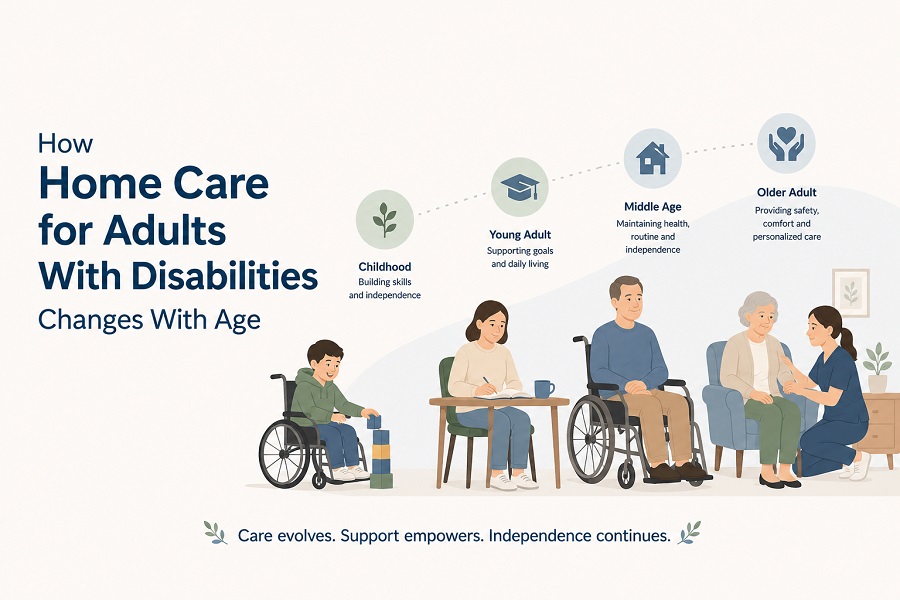
Home care for adults with disabilities often begins with routines that have worked for years. A person may know the same morning schedule, the same meal habits, and the same way of moving through the home. Then age starts changing the pace of the day.
A family planning for aging with Down syndrome at home may first notice changes in sleep, bathing, meals, medication reminders, or stamina. Those changes can be small at first. They still deserve attention because small changes can reshape the whole home routine.
Why home care for adults with disabilities changes over time
A lifelong disability does not freeze someone in the same stage of care forever. Bodies age. Energy changes. Parents age too. Siblings may step into decision-making roles. A home that felt easy to move through at age 30 may feel harder at age 50.
Some adults need more help because physical tasks take longer. Others need more reminders because memory, attention, or judgment has shifted. A person may still want the same independence, but the steps needed to protect that independence may look different.
Good care does not take over every task. It adjusts the support around the person so the day can keep working.
The first signs that the home routine needs a closer look
Families often notice the shift through repeated small disruptions. The person may get tired faster after dressing. A shower may take longer. Meals may become less balanced. Appointments may be harder to track. A familiar walk may start to feel risky.
These signs do not always call for a large care change. They do call for closer observation.
Daily tasks may take more effort
A task can look the same from the outside but take much more energy than before. Getting dressed may now require extra time because balance, flexibility, pain, or sequencing has changed. Preparing lunch may take longer because standing at the counter feels tiring.
Watch for changes in:
- Bathing and grooming
- Dressing and laundry
- Meal preparation
- Medication reminders
- Transportation
- Bathroom safety
- Sleep routines
The goal is not to remove every hard task. It is to see which tasks now need setup, reminders, or hands-on help.
Safety risks may become easier to miss
Safety concerns can build quietly. A person may start holding furniture while walking, skipping meals, leaving water running, or forgetting to use mobility equipment. Family members may explain away each event until several have stacked up.
A home care plan can help by making the routine more visible. When someone checks meals, mobility, hygiene, and mood on a steady schedule, patterns are easier to catch.
How support needs can differ by condition
Adults with lifelong disabilities do not all age in the same way. Two people may both need home care, but for very different reasons. One person may need help with memory and communication. Another may need help with movement, pain, transfers, or equipment.
That is why a care plan should begin with the person, not the diagnosis.
Down syndrome and aging at home
Adults with Down syndrome may have long-standing routines that support comfort and independence. Age can bring new health checks, sleep concerns, hearing or vision changes, memory shifts, or changes in mood and activity.
Families may notice that a person who once moved easily through the day now needs more prompting. Another person may become less interested in activities they used to enjoy. A change in behavior may be tied to pain, hearing, sleep, thyroid issues, depression, or another health concern.
Home care can help the family track those changes in plain daily terms. Did breakfast get finished? Was the person more tired than usual? Did they need extra help with bathing? Did they seem withdrawn after an outing?
Those observations give the medical team better detail than a vague note that the person “seems different.”
Cerebral palsy and aging at home
Cerebral palsy affects movement, balance, and posture. The condition itself does not progress in the same way as some neurological diseases, but the body can still change after years of working harder to move, sit, stand, or transfer.
A similar shift can happen when cerebral palsy home care has to adjust for fatigue, pain, balance, or equipment needs in adulthood. A person may still know exactly what they want to do, but the physical cost of doing it may rise.
Home care can support transfers, bathing, dressing, meal setup, transportation, and safe movement around the home. It can also help protect energy for the parts of the day the person values most.
Home care for adults with disabilities should protect choice
Aging can bring more support needs, but that does not mean every choice should move away from the adult receiving care. People still have preferences, habits, dislikes, friendships, and privacy.
Care works better when it respects those details.
Ask what the person wants help with first. Ask what they want to keep doing on their own. Look at where help would reduce stress without taking away control. A caregiver might set out clothes but let the person choose what to wear. They might prepare the bathroom but give privacy during safe parts of the routine.
Independence is not only about doing everything alone. It can also mean having the right setup to keep making choices.
When parents are aging too
Many adults with disabilities have been supported by parents for decades. That family history can be loving and steady, but it can also hide strain. A parent in their 70s or 80s may still be lifting, driving, cooking, managing appointments, and handling paperwork.
At some point, the parent’s health becomes part of the care plan. If the parent falls, has surgery, develops memory changes, or simply becomes worn down, the adult child’s routine may change overnight.
Planning earlier can prevent a rushed decision later. It gives the family time to introduce outside care slowly, write down routines, gather documents, and decide who will help with medical visits, finances, transportation, and backup care.
What a practical home care plan can include
A strong care plan is not only a schedule. It is a working picture of the day.
It may include:
- Morning and evening routines
- Mobility support
- Meal and fluid reminders
- Medication prompts
- Personal care help
- Transportation
- Light housekeeping
- Activity and companionship
- Notes for family members
- Safety checks around the home
The plan should also name what the caregiver should report. Changes in sleep, appetite, mood, bathroom habits, falls, pain, confusion, or energy should not stay hidden in casual conversation.
How to introduce more help without making it feel sudden
A new caregiver can feel like a big change, especially when the person values routine. Starting small can make the shift easier.
A short visit may begin with errands, meal prep, or a walk. The caregiver can learn the home while the family member stays nearby. Over time, the visit can expand into personal care, transportation, or longer blocks of support.
The first goal is familiarity. Trust builds through repeated ordinary moments, not one big explanation.
Questions families should ask before changing care
Before adding hours or changing the schedule, families can step back and look at the routine in detail.
Useful questions include:
- Which tasks take longer than they used to?
- When does fatigue show up?
- Are falls or near-falls happening?
- Are meals, fluids, and medications steady?
- Is the person avoiding activities they used to enjoy?
- Is the main family caregiver sleeping and keeping appointments?
- What does the adult receiving care want to keep doing alone?
- Which changes should be shared with a doctor?
These questions help keep the care plan grounded in real life.
FAQ
What is home care for adults with disabilities?
Home care for adults with disabilities is support provided in the home for daily routines such as bathing, dressing, meals, transportation, reminders, companionship, mobility help, and safety checks. The exact care depends on the person’s abilities, preferences, and health needs.
When should families increase home care hours?
Families may need more care hours when daily tasks take longer, safety concerns repeat, family caregivers are exhausted, appointments are missed, or the person needs help during times of day that were once manageable.
Can home care support adults with Down syndrome as they age?
Yes. Home care can support adults with Down syndrome by helping with routines, meals, hygiene, reminders, transportation, companionship, and safety monitoring. It can also help families notice changes that should be shared with healthcare providers.
Can adults with cerebral palsy need more care later in life?
Yes. Adults with cerebral palsy may need more help later because pain, fatigue, balance, mobility, transfers, or equipment needs can change with age. Support should be based on the person’s daily routine and goals.
Key Takeaway
Home care for adults with disabilities should change as the person’s needs, energy, health, and family support change. The best plan does not assume that a lifelong routine will always work the same way. It watches the day closely, protects choice, and adds help before small problems become the whole routine. Families can begin with the tasks that now feel harder, then build care around the life the person is still trying to live.
Sources
Care at Home Guide: Aging for Adults with Disabilities: Down Syndrome
Care at Home Guide: Aging for Adults with Cerebral Palsy
CDC: Down Syndrome
CDC: Living with Down Syndrome
CDC: About Cerebral Palsy
CDC: Treatment and Intervention for Cerebral Palsy
