

Many children do not know how to explain vision problems clearly. A child may think blurry distance vision is normal, especially if it happens slowly. This is why parents need to watch for the Early signs of Myopia before the condition affects school, play, and daily comfort.
Myopia, also called short-sightedness, means a child can usually see nearby objects clearly but has trouble seeing things far away. For example, words on a whiteboard, road signs, or a television screen across the room may look blurry.
Early eye checks are important because myopia can progress as children grow. The sooner it is found, the easier it is to manage vision needs and discuss ways to slow progression.
What Is Myopia in Children?
Myopia happens when light does not focus properly on the retina at the back of the eye. This makes distant objects look unclear.
In children, myopia may develop during the school years. It can also get worse quickly during growth periods. Some children may only need glasses at first, while others may need regular monitoring if their prescription keeps changing.
Myopia is not just about needing spectacles. Higher levels of myopia may increase the risk of eye problems later in life. That is why parents should not wait until a child’s vision becomes very poor before booking an eye check.
Common Early Signs Parents Should Notice
The early signs can be subtle. Some children adjust their habits without saying anything is wrong.
Parents may notice signs such as:
- Squinting when looking at faraway objects
- Sitting too close to the television
- Holding books, tablets, or homework very close
- Complaining about blurry vision
- Rubbing or blinking the eyes often
- Headaches after school or screen time
- Losing focus during lessons
- Moving closer to the front of the classroom
- Avoiding activities that need clear distance vision
A child may also say they cannot see the board clearly, but some children feel shy about speaking up. Teachers may be the first to notice that a child is struggling to copy notes or pay attention in class.
Why Children May Not Tell Parents
Children often assume everyone sees the same way they do. If the blur develops slowly, they may not realise their vision has changed.
Some children also find ways to cope. They may sit nearer, ask classmates what is written on the board, or rely more on memory. These habits can hide the problem for a while.
Parents should pay attention when a child’s behaviour changes. If a child who once enjoyed reading signs, watching sports, or joining classroom activities suddenly seems less interested, vision could be one possible reason.
When Should Parents Book an Eye Check?
Parents should book an eye check when signs appear more than once or start affecting daily life. It is better to check early than to wait and guess.
An eye check may be needed if a child:
- Squints often
- Complains of headaches or tired eyes
- Struggles to see the board at school
- Holds screens or books too close
- Has a sudden drop in school focus
- Has parents or siblings with myopia
- Has not had a recent eye examination
Even if a school screening has been done, a proper eye check can give a clearer picture of the child’s vision. It can also help parents understand whether the child needs glasses, monitoring, or myopia management support.
How Myopia Can Affect School and Daily Life
Clear vision helps children learn, play, and move confidently. When a child cannot see clearly at a distance, school can become harder.
They may miss words on the board, copy notes incorrectly, or feel tired from trying to focus. Over time, this may affect attention and confidence.
Myopia can also affect activities outside the classroom. Sports, outdoor games, and even recognising people from a distance may become more difficult. Some children may seem careless or distracted, when the real issue is that they cannot see clearly.
What Happens During an Eye Check?
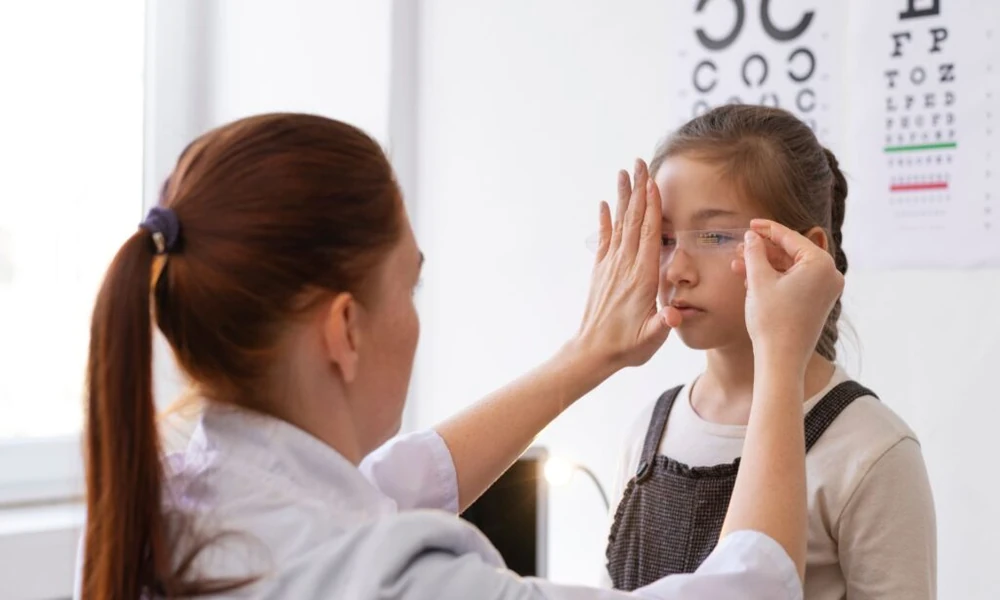
A children’s eye check usually includes simple tests to measure vision and check the child’s eye power. The optometrist may ask about school habits, screen use, outdoor time, family history, and any symptoms.
The goal is to understand how well the child sees and whether the prescription is changing. If myopia is found, the next step may include spectacles, regular monitoring, or options that may help slow progression.
Parents should also ask how often their child should return for follow-up checks. Children with changing prescriptions may need closer monitoring than children with stable vision.
Healthy Habits That Support Children’s Eyes
Good daily habits cannot replace an eye check, but they can support better eye care.
Parents can encourage children to:
- Spend more time outdoors each day
- Take regular breaks from reading or screen use
- Keep books and screens at a comfortable distance
- Use good lighting when studying
- Avoid long, continuous near work
- Tell an adult if things look blurry
Outdoor time is especially helpful for children’s eye health. It also gives children a break from long periods of close-up work.
Myopia Management Is Different from Just Wearing Glasses
Glasses help children see clearly, but they may not always slow myopia progression. Myopia management looks at how quickly a child’s prescription is changing and what options may help control it.
Depending on the child’s age, prescription, lifestyle, and eye health, options may include myopia control lenses, contact lens options, orthokeratology, atropine eye drops, and lifestyle changes.
Spectacle Hut supports children’s myopia care with options such as myopia-control lenses, Ortho-K, multifocal contact lenses, atropine guidance, and lifestyle advice, depending on what is suitable for the child.
Why Early Action Matters
The early myopia signs in children are easy to miss, but they should not be ignored. Blurry distance vision can affect learning, confidence, and daily comfort.
Parents do not need to wait for severe symptoms before booking an eye check. If a child squints, sits too close, rubs their eyes often, or struggles to see at school, an eye examination can provide clear answers.
Early checks help families understand what is happening and what steps to take next. With the right support, children can see more clearly and build healthier eye habits as they grow.
